Langley ICBC Kinesiologist: Active Rehab & Car Accident Injury Recovery

Langley kinesiology treatments and ICBC active rehab programs provide precise, evidence-informed exercise prescriptions engineered to restore physical function, rebuild structural endurance, and eliminate chronic pain after a motor vehicle accident. At Near Me Therapy, our University-educated Kinesiologists specialize in transitioning patients from acute soft-tissue limitations back to full functional independence. If you are navigating an active ICBC claim in Langley City, the Township of Langley, or Surrey, you are automatically pre-approved for 12 kinesiology sessions within 12 weeks of your accident date—meaning zero out-of-pocket costs and seamless direct clinic billing. We target objective biometric markers like restricted cervical range of motion, compensatory lumbar shifting, and shoulder girdle weakness. By combining targeted mechanical loading, core stabilization, and structural mobility work, we assist commuters, families, and workers across Willoughby, Walnut Grove, Brookswood, and Cloverdale in returning to work, sport, and daily life without structural relapse.
Targeted Post-Accident Rehabilitation: Physical Realism Over Fluff
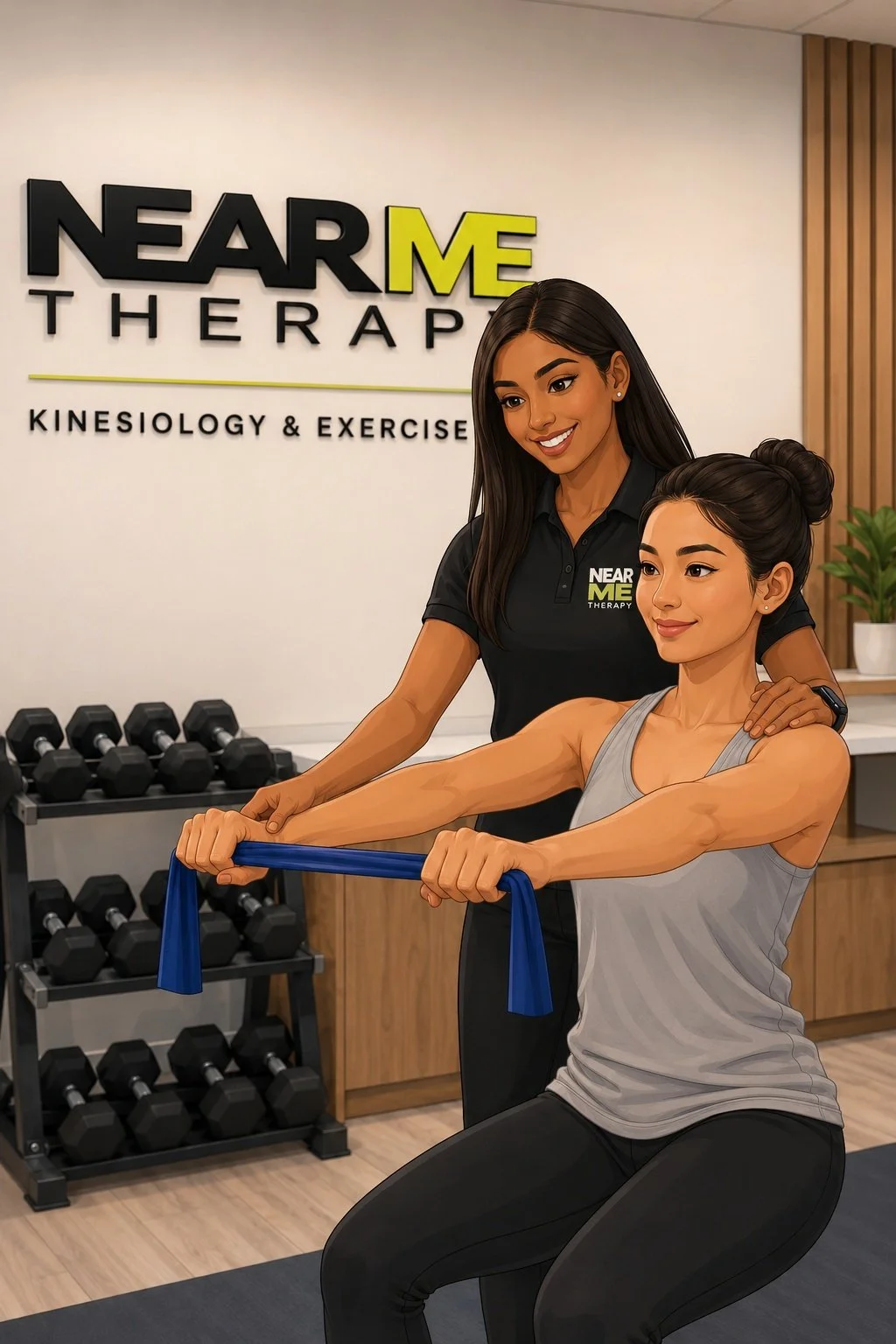
Recovering from a motor vehicle collision requires moving past temporary passive relief and shifting into active physical restoration. When a vehicle impact forces the human body through sudden, violent acceleration and deceleration, it shears the deep soft-tissue structures of the spine, neck, and extremities.
Our specialized clinical gym space is strategically located for rapid access right off Highway 1 in Willoughby and via the Fraser Highway corridor. This makes consistent rehabilitation effortless whether you reside in Langley City, work in the Township, or commute from adjacent Surrey neighborhoods.
Specific Anatomical Patterns We Rectify:
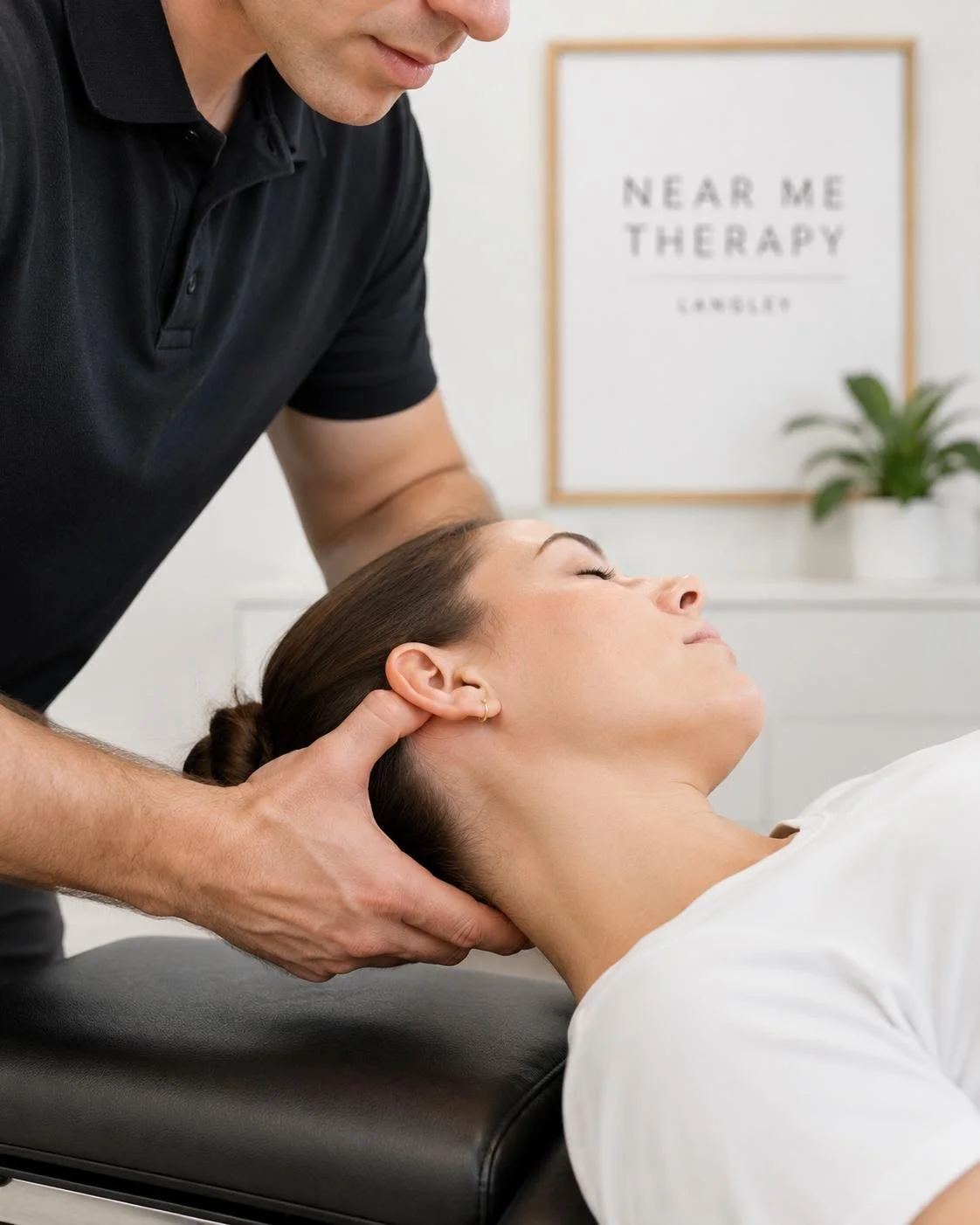
Cervical Whiplash Strain: We isolate and correct hypertonic upper trapezius, splenius capitis, and levator scapulae muscles that restrict your lateral neck rotation and trigger chronic tension headaches after a rear-end collision.
Lumbar and Pelvic Instability: We reactivate deep core stabilizers, specifically the transverse abdominis and the multifidi muscles, to eliminate the deep, constant aching in your lower back caused by sudden seatbelt restraint forces.
Compensatory Gait Anomalies: We eliminate movement adaptations like pelvic hiking, hip guarding, or unilateral weight-shifting that develop when you unconsciously protect an injured knee, ankle, or foot during your daily walk.
The Collaborative Recovery Pipeline: From Pain Focused Care to Active Functional Autonomy
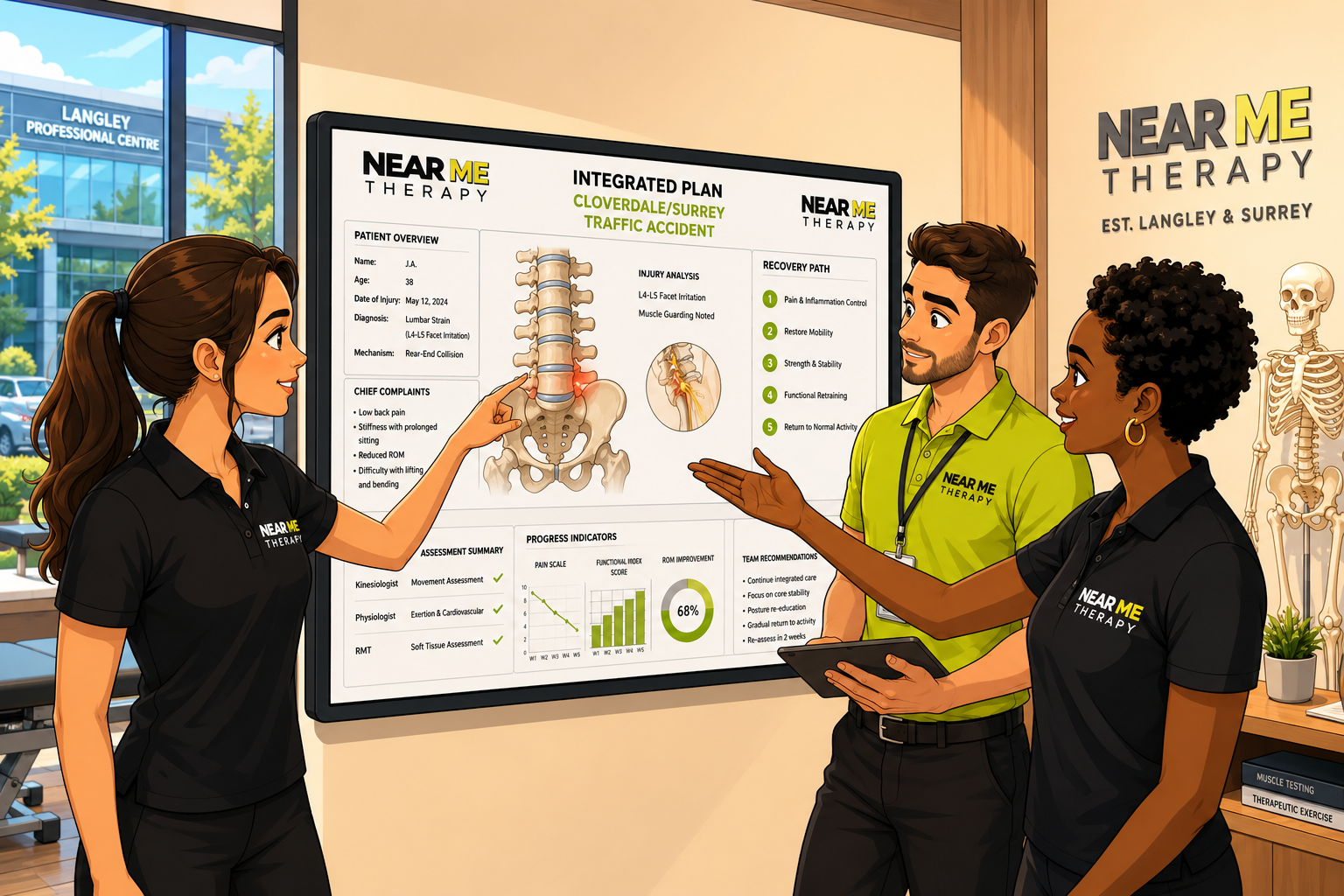
At Near Me Therapy, our clinic operates on an interconnected, cross-modality care model. We explicitly bridge the gap between initial symptom relief and long-term functional resilience by linking your therapies together:
Step 1: Structural, Tissue, & Nervous System Preparation (Chiropractic, RMT, Acupuncture, & Counselling): Our Langley Chiropractors restore segmental joint mobility to your cervical and lumbar spine, while our Registered Massage Therapists (RMTs) decompress protective muscle guarding. Concurrently, our Acupuncturists target localized swelling. Crucially, our Clinical Counsellors step in during this acute phase to address the trauma of the crash, down-regulate an overactive nervous system, and alleviate driving anxiety. By calming the brain's alarm system, we lower your systemic pain perception, allowing your muscles to finally release.
Step 2: Functional Mechanics (Physiotherapy): Once your nervous system and acute pain stabilize, Physiotherapy introduces precise clinical movement patterns, treats localized ligamentous or tendon strains, and safely bridges the gap between passive tissue release and active exercise.
Step 3: Biomechanical Stabilization (Kinesiology): This is where your long-term recovery is locked in. Your Kinesiologist takes the restored joint ranges from your Chiro, the relaxed tissues from your RMT, and the calm nervous system baseline established by your Counsellor and Physio, translating them into a progressive, custom-tailored conditioning program. By actively strengthening these muscle groups under load, we ensure your body can withstand the physical demands of returning to work, lifting your children, or playing sports without re-injury.

Meet Gitika, BHK — Registered Kinesiologist & Resident Physiotherapist
Gitika bridges the gap between passive pain relief and active strength. Her journey into rehabilitation began firsthand after her father’s motor vehicle accident in 2010—an experience that inspired her mission to help patients eliminate pain, fix compensatory movement patterns, and safely return to their pre-accident lives.
With advanced degrees and training spanning both Physiotherapy and Kinesiology, Gitika specializes in taking the joint mobility gained from your Chiropractor or the soft-tissue releases from your RMT and translating them into targeted, active gym protocols so your body doesn't relapse.
Dual-Expertise Advantage: Seamlessly combines physiotherapy manual therapy baselines with active kinesiology exercise prescriptions.
Multilingual Care: Provides fully accessible, culturally inclusive care fluent in English, Punjabi, and Hindi for our diverse Langley City, Township, and Surrey communities.
Advanced Clinical Certifications: Specialized in TMJ (jaw) rehabilitation, soft tissue release, and advanced kinesiology taping (RockTape) to target complex whiplash and neck tension.
Direct Billing & Zero Friction Insurance Management
Navigating insurance paperwork and claims adjusters while recovering from an injury is incredibly exhausting. We completely remove the administrative burden so you can focus 100% on your physical health.
Guaranteed $0 Out-of-Pocket Cost: If your motor vehicle accident occurred within the last 12 weeks, ICBC automatically covers your first 12 kinesiology visits. There are no hidden user fees, no user deductibles, and no upfront costs.
Direct Electronic Billing: Our dedicated administrative team bills ICBC directly after every single session. You will never have to pay out of pocket, save receipts, or wait months for reimbursement checks.
Full Extension Management: If your accident occurred more than 12 weeks ago, or if your physical recovery requires care past your initial allocation, our team takes charge. We write, compile, and submit comprehensive, data-backed medical exception reports directly to your ICBC recovery coordinator to secure continuous funding for your care.
Hyper-Local Community Integration: Accessible Care Where You Live
Consistency is the most vital variable in active rehabilitation. Our multidisciplinary clinic sits at the geographical nexus of the region, ensuring premium medical rehab is always within an easy drive.
Langley City & Downtown Core: Located just minutes from the central city center, offering easy access for local retail workers, business owners, and residents seeking care close to home.
Willoughby & Walnut Grove: Perfectly situated for busy commuters utilizing the Highway 1 or 200th Street corridors, allowing you to seamlessly complete an active rehab session on your way to or from the office.
Brookswood & Murrayville: Offering highly flexible early morning and late evening booking blocks that integrate smoothly with local school drop-offs, family schedules, and community center routines.
Surrey & Cloverdale Borders: Positioned right along major connecting transit corridors, providing an elite, easily accessible rehabilitation option for families and commuters living across the eastern Surrey border.
Lock In Your Pre-Approved ICBC Active Rehab Sessions
Do not allow temporary car accident soft-tissue injuries to solidify into permanent physical limitations or chronic pain patterns. Schedule your comprehensive, 1-on-1 baseline biomechanical assessment with our Langley Kinesiology team today. We will set up your ICBC direct billing instantly so your focus remains entirely on your physical restoration.
Active Rehab & ICBC Recovery Guides