
Active Release and Biomechanical Rehabilitation: A Chiropractor-Led Approach to TMJ and Posture
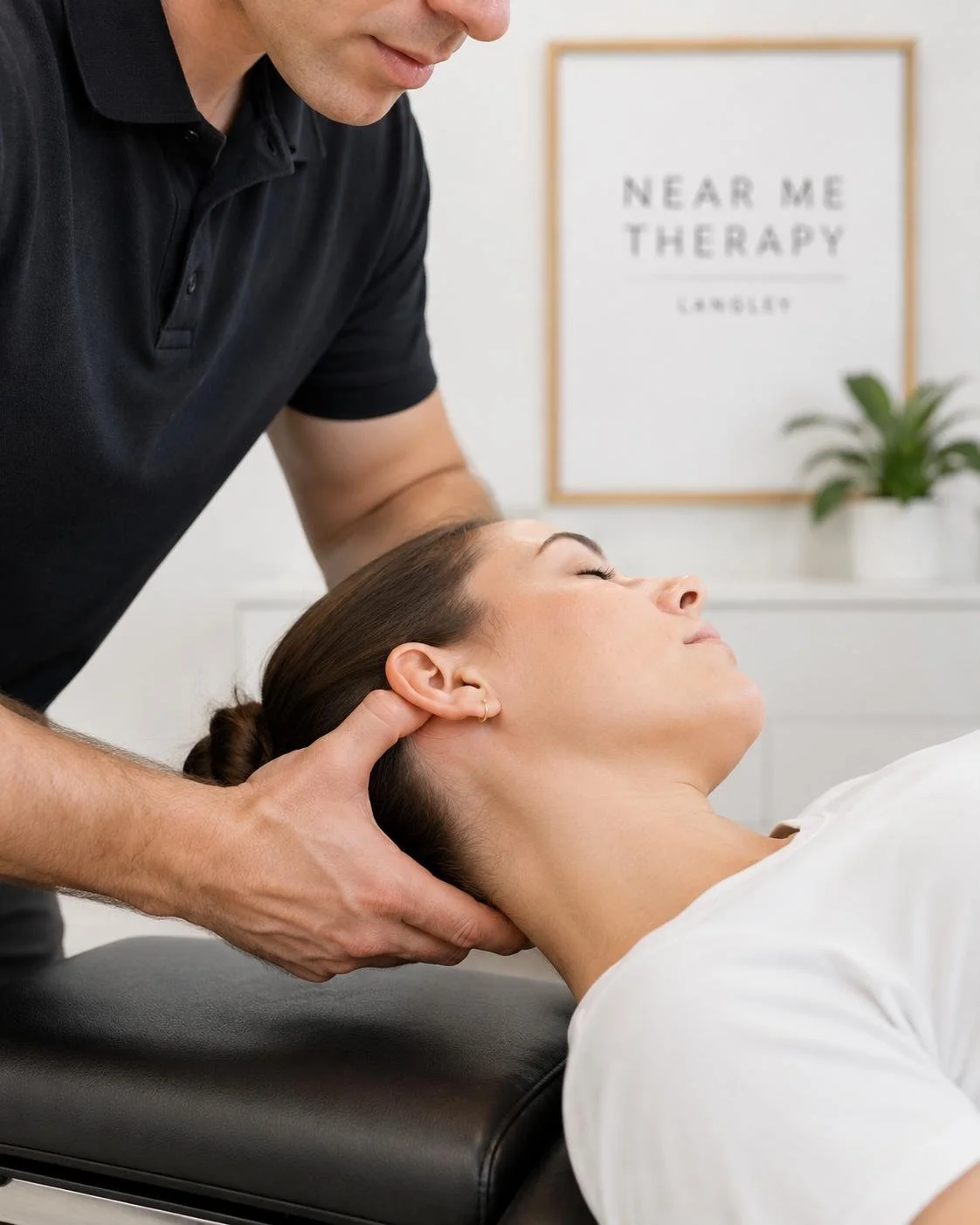
Figure1: Active release techniques applied by an expert chiropractor target deep-tissue adhesions at the base of the skull, immediately relieving the mechanical tension that pulls the jaw out of alignment.
TMJ dysfunction and ergonomic posture strain are mechanical and soft-tissue failures that require an aggressive, movement-based clinical intervention to resolve permanently. When patients spend hours commuting along the Fraser Highway or sitting at desks in Willoughby and Walnut Grove, they lock their bodies into a forward head posture. This positional stress creates deep myofascial adhesions in the masseter, temporalis, and upper cervical muscles, causing the temporomandibular joint (TMJ) to tracking unnaturally. Rather than relying on traditional massage therapy, our clinic utilizes chiropractor-led active release and soft tissue mobilization to break down these dense structural restrictions. By combining these targeted provider-assisted releases with clinical kinesiology exercises and dental hygiene assessments, we directly realign the cervical spine, lengthen chronically shortened muscles, and restore normal jaw tracking, offering local professionals an efficient, movement-focused solution to chronic craniofacial pain.
The Mechanics of Soft Tissue Adhesions in TMJ and Posture
When you sit slouched at a computer, your head drifts forward, forcing the muscles at the base of your skull and the angle of your jaw to work over hours just to keep your eyes level. Over time, this constant eccentric load starves the tissues of oxygen, leading to micro-tears and the formation of dense, fibrous scar tissue known as myofascial adhesions.
These adhesions glue muscle layers together, preventing the smooth sliding motion required for natural movement. In the jaw, adhesions within the masseter and lateral pterygoid muscles pull the mandible out of alignment, causing unequal pressure on the delicate articular disc of the TMJ. This mechanical distortion presents as:
An audible, painful clicking or popping sound when opening the mouth.
Severe tension headaches radiating straight from the temples to the base of the skull.
Hypertonic tightness that restricts your ability to open your mouth fully during meals.
A constant, deep ache in front of the ear canal that intensifies during times of high stress.
For individuals working or living near Brookswood and Murrayville, allowing these adhesions to remain means the jaw will continue to operate under destructive angles, breaking down the joint cartilage over time.
Cross-Modality Co-Management: The Active Release and Kinetic Blueprint
Our clinic treats these complex neuromuscular issues through a highly coordinated, active strategy where our chiropractor sets the structural stage, the kinesiologist builds movement longevity, and the dental hygienist protects oral health.
        [Postural Strain & Soft Tissue Adhesions]
                                        │
                                       ▼
       ┌───────────────────────┐
       │               Chiropractic Care                          ──> Performs active release (ART), muscle release, joint mobilizations and adjustments (if needed)
       └───────────────────────┘
                                        │
         ┌─────────┴─────────┐
         ▼                                                         ▼
 [Clinical Kinesiology]         [Dental Hygiene]
 Retrains deep flexors          Identifies occlusal wear
 & reinforces alignment      & night grinding damage
1. Chiropractor-Led Active Release and Joint Mobilization
Our chiropractors do not simply focus on quick spinal adjustments; they specialize in deep, movement-based soft tissue therapy. By applying precise, manual tension directly to the hypertonic masseter, temporalis, and suboccipital muscles while actively guiding your jaw and neck through their full ranges of motion, the chiropractor physically breaks down deep-seated adhesions. This active release instantly restores tissue length and elasticity, allows the cervical spine (C1-C3) to accept a proper structural adjustment, and unloads the compressed TMJ disc.
2. Clinical Kinesiology: Reinforcing the Restored Mobility
Once our chiropractor breaks down the restrictive tissue adhesions and restores joint mobility, our kinesiologists immediately step in to secure those structural gains. The kinesiologist designs a targeted neuromuscular rehabilitation program focusing on strengthening the deep cervical flexors and stabilizing the scapulothoracic complex. By activating these weak muscle groups, we pull your posture back into alignment, ensuring your head stays centered over your shoulders and preventing the tissue adhesions from reforming during your daily desk work.
3. Clinical Dental Hygiene: Tracking Intra-Oral Stress Markers
Daytime structural strain regularly transitions into nighttime bruxism (clenching and teeth grinding) as the central nervous system attempts to manage physical stress. Our dental hygienists perform precise diagnostic screenings during your routine care, checking for clinical markers like tongue scalloping, tooth wear facets, and abfractions. By reporting these oral indicators directly to your chiropractor and kinesiologist, we can continuously measure the clinical efficacy of your active treatment plan, ensuring that your daytime postural changes are successfully reducing destructive forces at night.
Active Workplace Ergo-Resets for Langley Professionals
To permanently support your active release treatments, you must change how you interact with your workspace. Implementing these specific, biomechanically targeted modifications will reduce muscle stress throughout your day:
The Active Retraction Reset: Sit upright with your feet planted firmly on the floor. Place two fingers on your chin and gently push your head straight back as if making a double chin, while simultaneously keeping your jaw completely relaxed and your teeth slightly parted. Hold for 3 seconds; repeat 5 times every hour to stretch the suboccipitals.
Monitor Height Optimization: Ensure your primary computer monitor is positioned so that the top edge sits exactly at eye level. If you work from a laptop in Cloverdale or Langley City, utilize an elevated laptop stand alongside an external keyboard and mouse to prevent your head from tilting downward into a compressed position.
The Masseter Release Breath: Whenever you feel yourself clenching during a difficult task, place your tongue gently on the roof of your mouth behind your front teeth, allowing your jaw to drop open slightly. Take three slow, deep diaphragmatic breaths to down-regulate your nervous system and instantly drop hypertonic jaw tension.
Resolve Your Structural Pain at the Root
Permanent relief from chronic jaw clicking and postural fatigue requires an active, clinical approach that targets both the joints and the underlying soft tissue adhesions. If you live or work in Langley, Willoughby, or Cloverdale, take proactive control of your body.
Evidence-Informed Foundations (References)
Calixtre, L. B., Moreira, R. F., Franchini, G. H., Alburquerque-Sendín, F., & Oliveira, A. B. (2015). Manual therapy for the management of pain and limited range of motion in subjects with signs and symptoms of temporomandibular disorders: A systematic review of randomized controlled trials. Journal of Oral Rehabilitation, 42(11), 847–861. https://doi.org/10.1111/joor.12321
Chaves, T. C., Turci, A. M., Pinheiro, C. F., Sousa, L. M., & Grossi, D. B. (2014). Static body posture and temporomandibular disorders: A systematic review. Brazilian Journal of Physical Therapy, 18(6), 481–499. https://doi.org/10.1590/bjpt-rbf.2014.0046
George, J. W., Tunstall, A. C., Tepe, R. E., & Skaggs, C. D. (2006). The effects of active release technique on instrument-assisted soft tissue mobilization on library workers with chronic neck pain. Journal of Chiropractic Medicine, 5(3), 90–94. https://doi.org/10.1016/S0899-3467(07)60140-5
Leahy, P. M. (2008). Active Release Techniques: Soft tissue management system manual. Active Release Techniques, LLC.
