
Important Deficiency Signs Your Hygienist Catches First: Part 1 – B Vitamins
Introduction
B-complex vitamins are essential nutrients that support energy production, nerve health, red blood cell formation, and tissue repair throughout the body.
This group includes vitamins B1, B2, B3, B5, B6, B7, B9 (folate), and B12.
When levels become low, symptoms often begin slowly and may go unnoticed.
In many cases, the mouth is one of the first places where visible changes appear, sometimes before fatigue, anemia, or neurological symptoms develop.
Because dental hygienists carefully examine the tongue, lips, cheeks, and healing patterns at routine visits, they may notice early warning signs that suggest a possible nutritional concern.
Why B-Complex Vitamins Matter
B-complex vitamins play critical roles in:
Producing healthy red blood cells
Supporting nerve function and brain health
Maintaining immune response
Repairing oral and skin tissues
Converting food into usable cellular energy
Deficiency can occur due to poor diet, digestive absorption problems, certain medications, or chronic medical conditions.
Importantly, symptoms may develop even when food intake appears adequate.¹
Early Oral Signs of B-Complex Deficiency
Clinical research consistently links B-vitamin deficiencies with recognizable oral tissue changes.
Common findings may include:
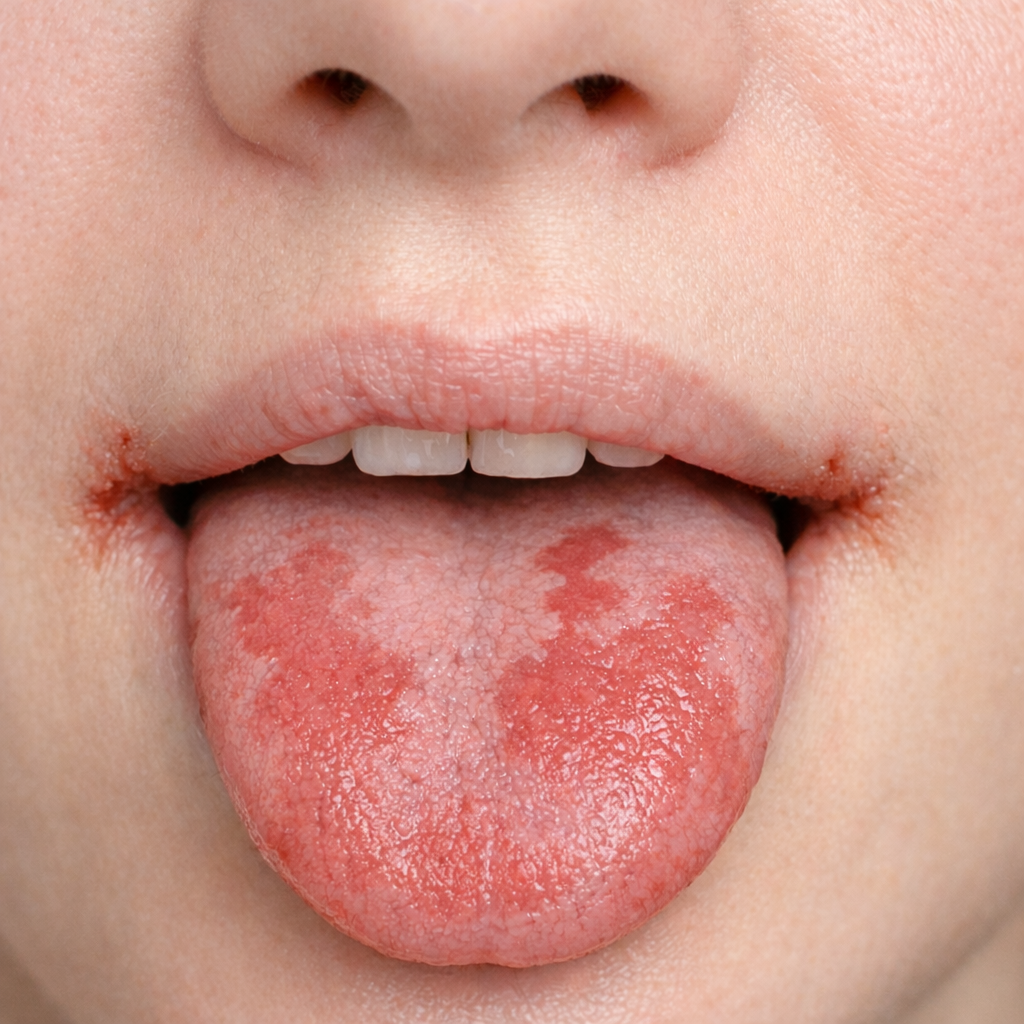
Glossitis — a smooth, red, or swollen tongue
Burning or soreness of the tongue or mouth
Angular cheilitis — cracks at the corners of the lips
Recurrent mouth ulcers
Dry mouth or altered taste sensation
Delayed healing of oral tissues
Systematic reviews show that low levels of B-vitamins-particularly folate and B12—are frequently associated with oral mucosal disease and inflammation.²
Additional systematic evidence examining hypovitaminosis in oral tissues similarly reports ulceration, glossitis, and mucosal irritation as common presentations.³
These oral findings often improve after appropriate vitamin replacement, supporting the biological relationship between deficiency and tissue health.
Burning Mouth and Nutritional Links
Burning sensations in the mouth can be difficult to explain because teeth and gums may appear normal.
However, clinical comparisons demonstrate that individuals with burning mouth symptoms often show higher rates of B-vitamin, iron, or hemoglobin deficiencies than healthy populations.⁴
While not every burning sensation is nutritional, persistent unexplained symptoms should prompt medical evaluation and possible laboratory testing.
Why Dental Hygienists May Notice First
Many individuals visit their dental hygienist more frequently than their physician.
During hygiene appointments, soft tissues are examined under strong lighting and magnification, allowing subtle color, texture, or healing changes to be detected early.
Because oral tissues renew rapidly, they can reflect metabolic or nutritional imbalance before systemic symptoms lead to blood testing.
When unusual patterns are observed, patients may be advised to follow up with a medical provider for further assessment.
When to Consider Testing
You may wish to speak with a healthcare professional about B-vitamin testing if you experience:
Persistent burning or soreness of the tongue
A smooth, red, or enlarged tongue
Cracks at the corners of the lips
Frequent mouth ulcers
Ongoing fatigue, tingling, or weakness
Early identification is important, as untreated deficiency can eventually affect nervous system function, blood health, cognition, and overall energy levels.¹
Food Sources of B-Complex Vitamins
When a B-complex vitamin deficiency is suspected, the next step is not only testing but also understanding where these nutrients naturally come from.
In many cases, improving dietary intake—alongside medical guidance—can support recovery and long-term health.
B-complex vitamins are found in a wide range of whole foods, especially those rich in protein, whole grains, and leafy vegetables.
Common dietary sources include:
Vitamin B12
Meat, poultry, and fish
Eggs and dairy products
Fortified plant-based milks and cereals
Folate (Vitamin B9)
Dark leafy greens such as spinach and kale
Beans, lentils, and chickpeas
Citrus fruits and fortified grains
Vitamin B6
Poultry, fish, and potatoes
Bananas and whole grains
Nuts and seeds
Vitamin B2 (Riboflavin) and B3 (Niacin)
Dairy products
Lean meats and fish
Whole grains and enriched cereals
Because vitamin B12 is found primarily in animal-derived foods, individuals following vegetarian or vegan diets may require fortified foods or supplementation under medical supervision.¹
Diet, Absorption, and Individual Needs
Even with a balanced diet, some people may still develop deficiency due to:
Digestive or absorption disorders
Certain medications that affect nutrient uptake
Age-related changes in stomach acid
Chronic health conditions
For this reason, persistent oral signs should not be treated with diet alone.
Proper medical evaluation helps determine whether dietary change, supplementation, or further investigation is appropriate.
Integrative Care and When Referral Matters
Recognizing possible signs of B-complex vitamin deficiency in the mouth is only the first step. Preventive healthcare is most effective when early observations lead to appropriate testing, treatment, and collaborative care.
At Near Me Therapy, dental hygiene services are part of a broader integrative health model.
When oral findings suggest a possible nutritional concern, patients may be guided toward next steps within a coordinated network of healthcare professionals.
This may include:
Medical referral for laboratory testing and diagnosis
Nutritional guidance to support intake and absorption
Chiropractic or rehabilitation care when fatigue, nerve symptoms, or musculoskeletal discomfort are present
Stress and wellness support, as chronic stress can influence nutrient balance and healing
Collaborative, patient-centred care is associated with earlier identification of underlying conditions, more comprehensive treatment planning, and improved long-term outcomes.
Because the mouth can reflect systemic change early, dental professionals play an important role in connecting patients to the right care at the right time.
Oral Health as a Window Into Whole-Body Health
Modern healthcare increasingly recognizes the oral-systemic connection.
Nutritional deficiencies, immune imbalance, and chronic disease may reveal early clues in the mouth long before other symptoms appear.
Dental hygiene care is therefore not only preventive for teeth and gums—it is also an opportunity to support earlier diagnosis and improved overall health.
Conclusion
A sore tongue, cracked lips, or recurring ulcers may seem minor, yet they can reflect meaningful changes in the body’s nutritional balance.
When the mouth begins to change, it may be an early signal that further evaluation is needed.
Sometimes the body speaks quietly first.
Knowing how to recognize these signs can make an important difference in long-term health.
REFERENCES
O'Leary, Fiona, and Samir Samman. “Vitamin B12 in health and disease.” Nutrients vol. 2,3 (2010): 299-316. doi:10.3390/nu2030299
Putri NT, et al. Vitamin B12 and folate levels in oral mucosal disease: a systematic review. J Int Oral Health. 2024.
Bačun, Barbara et al. “Manifestations and Treatment of Hypovitaminosis in Oral Diseases: A Systematic Review.” Dentistry journal vol. 12,6 152. 21 May. 2024, doi:10.3390/dj12060152
Sun, Andy et al. “Burning mouth syndrome: a review and update.” Journal of oral pathology & medicine : official publication of the International Association of Oral Pathologists and the American Academy of Oral Pathology vol. 42,9 (2013): 649-55. doi:10.1111/jop.12101
