
Bleeding Gums: Is It Always Gingivitis?
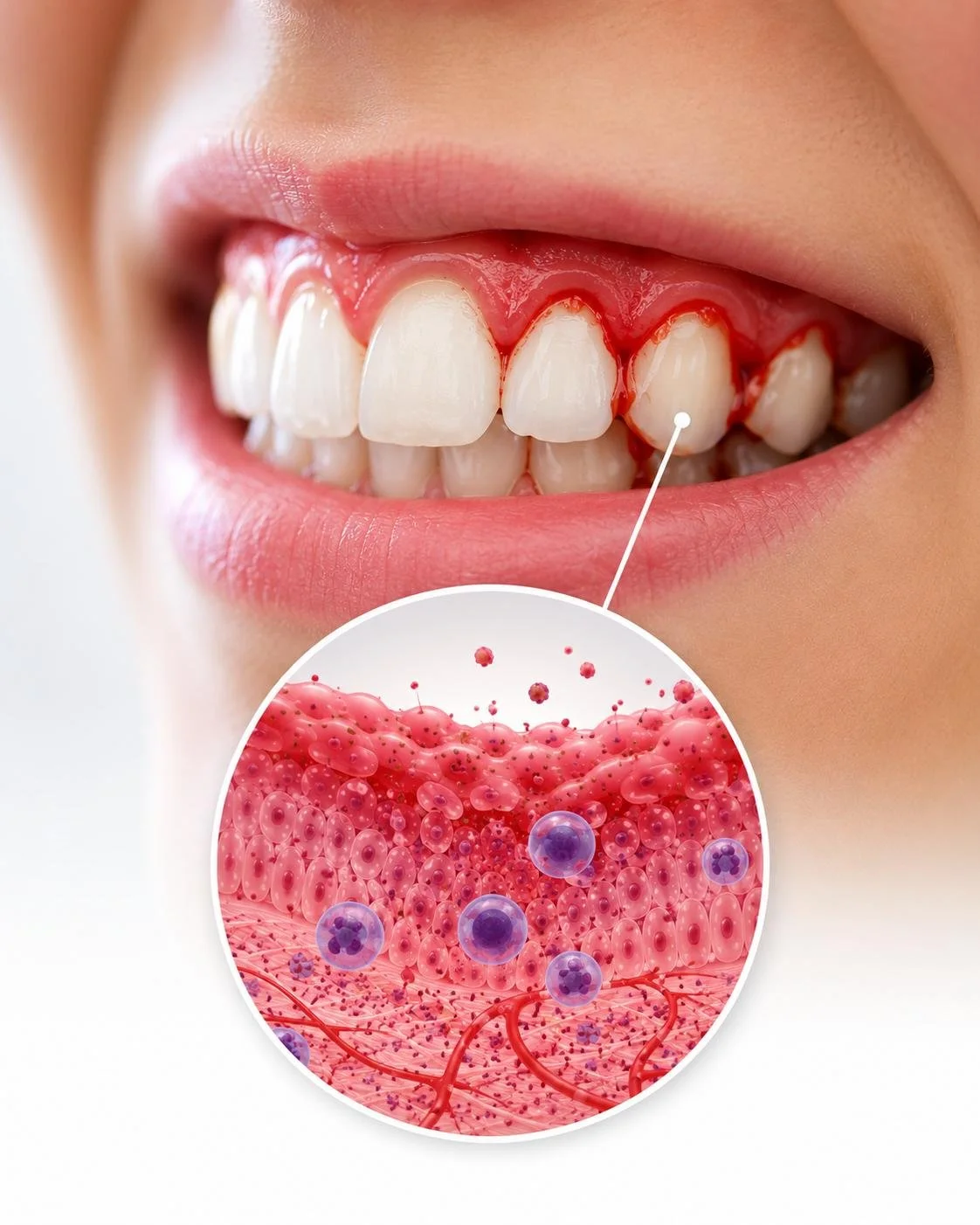
Figure 1: Bleeding gums can be an early warning sign of gingivitis and underlying gum inflammation. This microscopic illustration highlights how oral bacteria and immune responses affect gum tissue before advanced periodontal disease develops. Early dental hygiene care can help protect long-term oral and systemic health.
When a patient brushes their teeth or slides floss between their premolars, seeing pink or crimson blood in the sink is an immediate warning sign. Most individuals assume this localized bleeding is the hallmark of gingivitis—and statistically, it often is. However, as a dental hygienist (previously designated as a dental hygiene practitioner) with over 20 years of clinical experience, Kamelia Bahrini looks beyond the superficial tissue. Bleeding gums are a symptom of capillary fragility and micro-vessel rupture within the sulcus, but the true cause is not always limited to bacterial plaque.
At Near Me Therapy in Langley City, Kamelia analyzes oral health through an integrative lens, recognizing that systemic biological factors, mechanical trauma, and biomechanical stress frequently manifest as bleeding oral tissues. If a person notices bleeding while brushing, it is essential to determine whether the issue stems from local bacterial inflammation, a systemic deficiency, or kinetic strain like nighttime teeth grinding. Treating the root cause requires evaluating how the oral cavity interacts with the patient's broader physiology.
The Physiology of Oral Bleeding

Figure 2: Bleeding gums are often a sign of inflammation—not “just brushing too hard.” This infographic illustrates how plaque bacteria and mechanical irritation can trigger tissue inflammation, fragile capillaries, and visible bleeding during brushing or flossing. Early intervention and proper oral hygiene can help prevent progression. For more oral health education, visit our dental hygiene page.
To understand why gums bleed, Kamelia emphasizes looking at the micro-anatomy of the oral mucosa. The gingival sulcus—the shallow groove between the tooth and the surrounding gum tissue—is lined with a delicate layer of cells called the sulcular epithelium.
When pathogenic plaque accumulates, the immune system dispatches white blood cells to the area. To facilitate this defense, local blood vessels dilate (open wider) and become highly permeable. The tissue becomes engorged with blood, changing from a healthy pale pink to a deep, dark red. The walls of these tiny capillaries thin out to allow immune cells to pass through. Consequently, even the slightest mechanical pressure from a toothbrush or floss can cause these fragile vessels to rupture, resulting in immediate bleeding.
Beyond Plaque: Three Surprising Causes of Bleeding Gums
While poor oral hygiene is the most frequent culprit behind capillary breakdown, Kamelia’s decades of practice have shown her that many patients from Brookswood to Walnut Grove present with bleeding gums despite meticulous brushing habits. She identifies three primary non-gingivitis reasons gums might bleed:
1. Mechanical Trauma and Toothbrush Abrasion
Many patients use too much physical force, believing harder scrubbing equals cleaner teeth. Using a firm-bristled toothbrush or applying aggressive lateral sawing motions exerts excessive sheer stress on the delicate gum margins. This friction physically tears the outer epithelial layers and punctures the underlying capillary network.
2. Biomechanical Strain: Nocturnal Bruxism (Teeth Grinding)
Teeth are suspended in their bony sockets by thousands of microscopic shock-absorbing fibers called the periodontal ligament (PDL). When a patient clenches or grinds their teeth at night—often driven by stress or structural jaw misalignment—it places massive kinetic pressure on these fibers.
This micro-trauma triggers an inflammatory response within the surrounding gum tissue. The blood vessels in the PDL and marginal gums engorge to cope with the physical strain, making them highly susceptible to bleeding during morning brushing, even in the complete absence of plaque.
3. Systemic Factors and Nutritional Deficiencies
The structural integrity of blood vessels relies heavily on essential micronutrients, particularly Vitamin C and B vitamins. Vitamin C is crucial for collagen synthesis, the foundational building block of blood vessel walls and connective tissues.
Without adequate nutrients, capillary walls become structurally weak and leak easily under minimal pressure. Furthermore, systemic conditions like hormonal fluctuations (such as during pregnancy or menopause), blood disorders, and medications like blood thinners directly alter blood thickness and vessel permeability.

Bleeding gums are not always “just from brushing too hard.” This infographic highlights both local oral health factors—such as plaque buildup, gingivitis, clenching, and aggressive brushing—and systemic contributors like vitamin deficiencies, hormonal changes, and certain medications. Persistent gum bleeding may be an early sign of inflammation, periodontal disease, or broader health changes. At Near Me Therapy Dental Hygiene Langley, we focus on evidence-informed preventive care, comprehensive oral assessments, and personalized dental hygiene education to help identify the root causes of gum inflammation before they progress.
The Near Me Therapy Integrative Approach
Because the human body operates as an interconnected network, Kamelia believes solving oral issues often requires looking beyond the mouth. Located right on Douglas Crescent near Highway 1, the Near Me Therapy clinic brings together a diverse team of professionals to treat the whole person.
If a patient's gum bleeding is tied to clenching and TMJ stress, Kamelia collaborates directly with the clinic's functional chiropractors and registered massage therapists (RMTs) to relieve neuromuscular tension in the jaw, neck, and upper back. If chronic stress is driving nocturnal grinding, the onsite trauma-informed clinical counsellors can help regulate the nervous system. The core problem is resolved by addressing both the physical symptoms in the mouth and the systemic or structural imbalances causing them.
Clinical Recommendations for At-Home Care
If individuals are noticing pink in the sink, Kamelia advises against stopping cleaning the area, as this allows more plaque to accumulate and worsens the vascular inflammation. Instead, she recommends adopting these evidence-informed habits:
Switch to an Extra-Soft Bristle Brush: Protect fragile capillary walls by using light, circular sweeping motions at a 45-degree angle to the gum line rather than scrubbing horizontally.
Track Micronutrient Nutrition: Incorporate collagen-supporting foods rich in Vitamin C (like bell peppers, citrus, and broccoli) to strengthen the structural integrity of blood vessel walls.
Monitor for Clenching Signs: Those who wake up with a dull ache in the jaw muscles near the temples or notice flattened surfaces on their molars should schedule an assessment for a custom digital night guard to protect periodontal tissues from nocturnal forces.
For commuters from Surrey or local residents in Murrayville and Willoughby, Kamelia emphasizes that persistent oral bleeding should never be ignored, as it serves as a direct indicator of underlying physiological stress.
References
Chapple, I. L. C., et al. (2015). Interaction of lifestyle, behaviour or systemic diseases with periodontitis. Journal of Clinical Periodontology, 42(S16), S1-S11. https://doi.org/10.1111/jcpe.12359
Trombelli, L., et al. (2018). Plaque-induced gingivitis: Case definition and diagnostic considerations. Journal of Periodontology, 89(S1), S46-S73. https://doi.org/10.1002/JPER.17-0576
Hujoel, P. P., et al. (2021). Bleeding tendency and ascorbic acid requirements. Nutrition Reviews, 79(7), 741-753. https://doi.org/10.1093/nutrit/nuaa115
Giacco, F., & Brownlee, M. (2010). Oxidative stress and diabetic complications. Circulation Research, 107(9), 1058–1070. https://doi.org/10.1161/CIRCRESAHA.110.223545
